dotsoical.com

Author name: Deepika

How Google Ads Work: A Simple Guide for Small Businesses

How Google Ads Work: A Simple Guide for Small Businesses

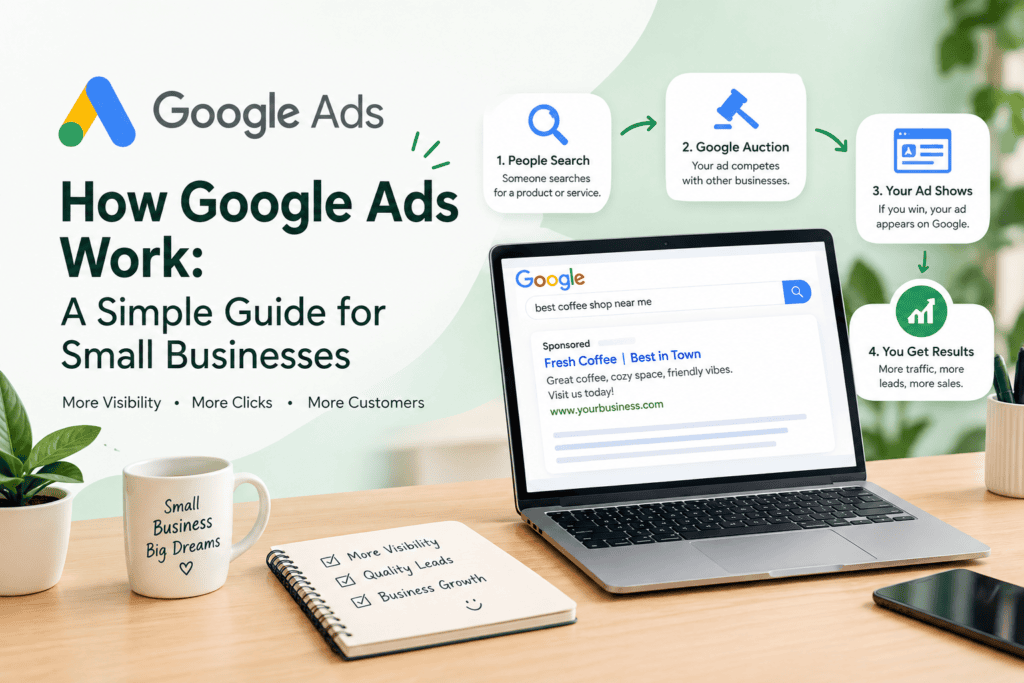
How Google Ads Work: A Simple Guide for Small Businesses Google Ads helps businesses reach people who search for their products or services online. For example, a person may search for “digital marketing agency in Delhi.” Google can show ads from businesses that offer digital marketing services. But how Google Ads work is simple. A business creates an ad, chooses who should see it, sets a budget, and selects keywords or other targeting options. Google then shows the ad to people who may be interested. In this guide, we will explain how Google Ads work in simple words. What Are Google Ads? Google Ads is Google’s online advertising platform. Businesses use Google Ads to promote their products and services. They can show ads on Google Search, YouTube, websites, apps, and other places. Search ads are one of the most common types. For example, imagine you own a web design company. You can create an ad for the keyword “web design company in Delhi.” When someone searches for this term, your ad may appear in the search results. How Google Ads Work The process starts with a business goal. You may want to: After choosing a goal, you create a Google Ads campaign. You then choose your target location, budget, keywords, and audience. You also write your ad. When someone searches on Google, Google checks the ads that match the search. Google then runs an ad auction. The auction decides which ads can appear and where they appear. If your ad wins a place, Google shows it to the user. This is the basic process behind how Google Ads work. What Is a Google Ads Auction? Google uses an auction every time a search can show an ad. The auction happens very quickly. Google looks at several things before showing an ad. These include: A higher bid does not always mean that your ad will appear first. Google also wants to show useful ads. This means a small business can compete with larger businesses if it creates relevant and useful ads. How Google Chooses Ads Google wants to give users useful search results. The same idea applies to ads. Google checks how closely your ad matches the user’s search. For example, suppose someone searches for “Google Ads agency in Delhi.” An ad about Google Ads services is more useful than an ad about web hosting. Your landing page also matters. The landing page is the page users see after they click your ad. The page should match the ad. It should also give users the information they need. Good ad relevance and a useful landing page can help improve your campaign. What Are Google Ads Keywords? Keywords are words or phrases that people search for on Google. Businesses use keywords to tell Google when they want their ads to appear. For example, a digital marketing agency may use keywords such as: You should choose keywords that match your products or services. You should also check what people are searching for before adding keywords to your campaign. Types of Google Ads Google offers different types of ads. Search Ads Search ads appear on Google when people search for something. They work well when people already want a product or service. For example, someone searching for “best salon near me” may see ads from local salons. Display Ads Display ads can appear on websites and apps. They can use images, text, or both. Businesses often use them to reach more people and build awareness. Shopping Ads Shopping ads help ecommerce businesses promote products. They can show a product image, price, store name, and other details. Video Ads Video ads can appear on YouTube and other video placements. They help businesses promote products and services through video. How Much Do Google Ads Cost? There is no fixed cost for Google Ads. The cost can change based on your industry, keywords, location, competition, and campaign settings. Some keywords cost more than others. For example, a keyword with many advertisers may have a higher cost. You can set a budget for your campaign. This helps you control your ad spend. But setting a budget is not enough. You should also track your results. How Google Ads Help Small Businesses Google Ads can help small businesses reach people who are already looking for their products or services. This can make Google Ads useful for lead generation. For example, a local dentist can run ads for “dentist in Delhi.” A customer searching for a dentist may see the ad and visit the website or call the business. Google Ads also lets businesses target specific locations. A business in Delhi can target Delhi instead of showing ads across the whole country. This can help reduce wasted ad spend. Common Google Ads Mistakes Many businesses make simple mistakes when they start using Google Ads. Common mistakes include: These mistakes can waste your advertising budget. You should check your campaign often and make changes when needed. Is Google Ads Worth It? Google Ads can be useful for businesses that want more leads, calls, sales, or website visitors. But results do not come from ads alone. You need the right keywords, good ads, a useful landing page, proper targeting, and good tracking. You should also test your campaigns and improve them over time. Then use Ai tools like ChatGPT to improve work. Final Thoughts Now you know how Google Ads work. The process starts with a business goal. You create a campaign, choose keywords and targeting, set a budget, and create ads. Google then checks your ad during its auction when someone searches. If your ad is relevant and meets Google’s requirements, it can appear in the search results. Google Ads can help small businesses reach people who are already looking for their products or services. The key is to target the right people, use the right keywords, write clear ads, and track your results. For more information check our more Blog.
How Meta Ads Work: A Simple Guide for Small Businesses
How Meta Ads Work

How Meta Ads Work: A Simple Guide for Small Businesses

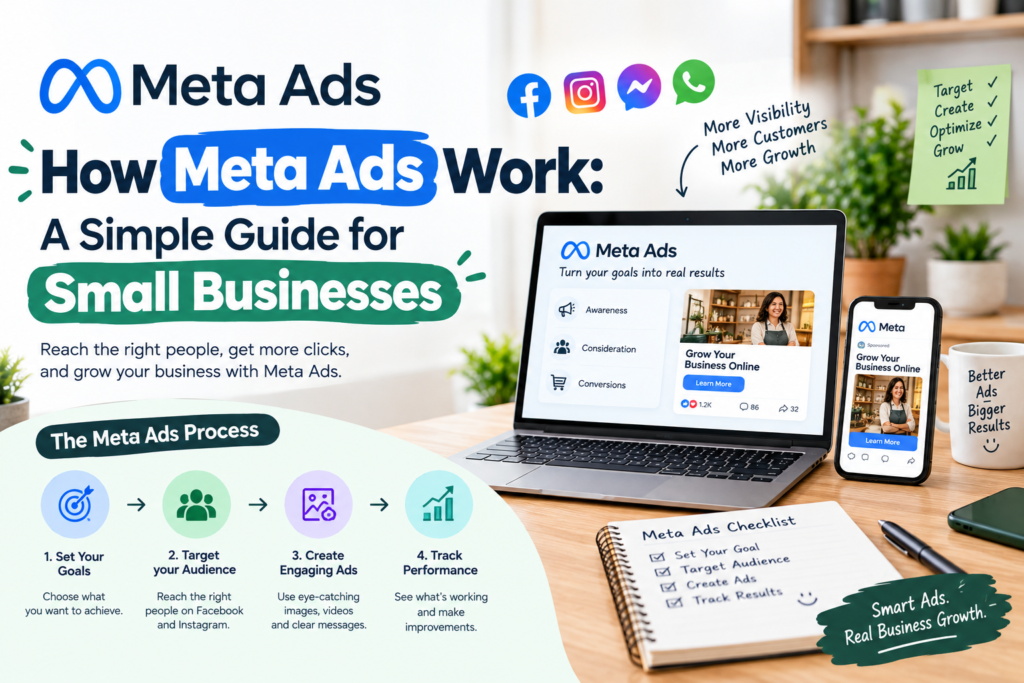
How Meta Ads Work: A Simple Guide for Small Businesses Meta Ads are paid ads that businesses run on Facebook and Instagram. They help businesses reach new customers, get leads, promote products, and increase sales. But how meta ads work can be confusing for beginners. You may have seen ads while using Facebook or Instagram and wondered why you see certain ads. Meta uses data, audience signals, and an ad auction to decide which ads to show to users. Advertisers choose their goal, audience, budget, and ad. Meta then delivers the ad to people who may be interested in it. In this guide, we will explain how meta ads work in simple terms. What Are Meta Ads? Meta Ads are paid advertisements created through Meta Ads Manager. Businesses can use these ads on Facebook, Instagram, Messenger, and other Meta placements. You can use Meta Ads for many business goals, such as: For example, a digital marketing agency can run Meta Ads to reach small business owners and generate new leads. How Meta Ads Work Step by Step The basic process is simple. You first choose what you want to achieve. Then you select your audience and budget. After that, you create your ad. Meta then uses its system to decide who should see your ad. Let’s look at how meta ads work step by step. 1. Choose Your Campaign Goal The first step is to choose your campaign goal. Your goal tells Meta what you want people to do after seeing your ad. Common goals include: For example, a business that wants customer details can choose a lead campaign. A business that wants online purchases can choose a sales campaign. Choosing the right goal is an important part of how meta ads work. 2. Choose Your Target Audience The next step is choosing your audience. You can tell Meta who you want to reach. You can use factors such as location, age, interests, and other available audience signals. For example, a local business in Delhi can target people in Delhi. You can also create custom audiences. These audiences can include people who have already visited your website or interacted with your business. Meta also allows advertisers to create lookalike audiences. These audiences can help businesses reach people who are similar to an existing audience. Your audience should match your product, service, and campaign goal. 3. Set Your Budget After choosing your audience, you need to set your advertising budget. You can choose a daily budget or a lifetime budget based on your campaign setup. Your budget affects how much Meta can spend to deliver your ads. You do not need a very large budget to start. A small business can start with a test budget. It can then check the results and make changes based on the data. Budget control is another key part of how meta ads work. 4. Create Your Ad Now you need to create the ad that people will see. A Meta Ad can include: Your ad should have a clear message. For example, a salon can create a video ad about a special offer. The video can show the service and ask people to book an appointment. A good ad should quickly tell users what you offer and what they should do next. 5. Meta Runs an Ad Auction One of the most important parts of how meta ads work is the ad auction. Many businesses may want to show ads to the same audience. Meta uses an auction to decide which ads should be shown. The advertiser with the highest bid does not always win. Meta looks at several factors. These can include the advertiser’s bid, the estimated chance of getting the desired action, and the quality of the ad. Meta uses these factors to decide which ad can be shown to a user. 6. Meta Delivers Your Ads After your campaign starts, Meta looks for people who are more likely to take the action you selected. For example, if your goal is to generate leads, Meta may try to show your ads to people who are more likely to submit a form. Meta uses campaign data to improve ad delivery. As your campaign collects more data, Meta can learn more about the people who respond to your ads. This is a key part of how meta ads work. 7. Track Your Results After your ads start running, you need to check their performance. Meta Ads Manager provides different metrics that help you understand your results. Some common metrics include: Reach: The number of people who saw your ad. Impressions: The number of times your ad was shown. Clicks: The number of times people clicked your ad. CTR: The percentage of impressions that resulted in clicks. CPC: The average cost of each click. Cost per lead: The average amount spent to generate one lead. ROAS: The revenue generated compared with your ad spend. These numbers help you understand what is working and what needs improvement. 8. Test and Improve Your Ads Testing is an important part of how meta ads work. Your first ad may not give you the best results. You can test different versions of your ads. For example, you can test: You can compare the results and use the data to improve your campaigns. Do not change everything at once. Test one major change at a time when possible. How Much Do Meta Ads Cost? There is no fixed cost for Meta Ads. Your cost can depend on several factors. These include your audience, industry, competition, campaign goal, ad quality, and budget. Two businesses can spend the same amount and get different results. For this reason, businesses should track important numbers such as cost per lead, cost per click, sales, and return on ad spend. Understanding costs is an important part of learning how meta ads work. How Meta Ads Help Small Businesses Meta Ads can help small businesses reach potential customers online. A local business can target people in

How Performance Marketing Agency Works

How Performance Marketing Agency Works

How Performance Marketing Agency Works Many businesses use online ads to get more customers. But running ads is not always easy. You need the right audience, good ads, and proper tracking. This is where a performance marketing agency can help. A performance marketing agency helps businesses run online marketing campaigns. It focuses on results such as leads, sales, clicks, or website visits. The agency checks the results and makes changes to improve the campaign. But how does a performance marketing agency work? Let’s look at the process step by step. What Is a Performance Marketing Agency? A performance marketing agency helps businesses get results from online marketing. The agency does more than create ads. It also tracks the results of those ads. For example, a business may want more leads. The agency can create an ad campaign to reach this goal. The agency may track: This data helps the agency see what is working. 1. The Agency Understands the Business The first step is to understand the business. The agency talks to the business owner. It learns about the products or services. It also looks at the business goals. For example, a business may want to: The agency uses these goals to plan the campaign. 2. The Agency Finds the Target Audience The next step is to find the right audience. Not everyone will need your product or service. So, the agency needs to reach people who may become customers. The agency may study: For example, a local gym may want to reach people who live near the gym. The right audience can help the business avoid wasting money on people who are not interested. 3. The Agency Selects the Right Platform The agency then chooses the right marketing platform. Different platforms can serve different goals. Some common platforms include: For example, Google Ads can help reach people who are already searching for a product or service. Facebook and Instagram Ads can help businesses reach people based on their interests and behavior. The agency chooses the platform based on the business goal. 4. The Agency Creates the Campaign Next, the agency creates the marketing campaign. This includes creating ads and setting up the campaign. The agency may work on: The goal is simple. The ad should catch attention and encourage people to take action. The action could be a purchase, form submission, phone call, or message. 5. The Agency Tracks Results Tracking is a key part of performance marketing. The agency needs to know what happens after someone clicks an ad. For example, imagine a business spends ₹10,000 on ads. The ads get 500 clicks. Out of those 500 visitors, 25 people submit a lead form. The agency can now check the cost of each lead. This data helps the agency understand campaign performance. Without tracking, the business may not know where its money is going. 6. The Agency Tests Different Ads One ad may not work for everyone. So, agencies often test different ads. They may test: For example, the agency may run two ads with different headlines. It can then compare the results. This process is called A/B testing. The agency uses the results to find what works better for the campaign. 7. The Agency Improves the Campaign Performance marketing does not stop after launching an ad. The agency checks the campaign regularly. It looks for ads that are getting good results. It also looks for ads that are costing too much. The agency may then: This process is called campaign optimization. The goal is to use the budget in a better way. 8. The Agency Reports the Results The agency also shares campaign results with the client. The report may show: These numbers help the business understand the campaign. The agency can also explain what worked and what needs to change. This makes it easier for the business owner to make decisions based on data. Why Do Businesses Hire a Performance Marketing Agency? Running online ads takes time. It also requires knowledge of advertising platforms and data. A performance marketing agency can manage these tasks for the business. The agency can help with: This can be useful for small businesses that do not have an in-house marketing team. However, marketing results can vary. They depend on factors such as the industry, competition, budget, offer, website, and target audience. Then use Ai tools like ChatGPT to improve work. Final Thoughts A performance marketing agency focuses on measurable results. The process starts with understanding the business and its goals. The agency then finds the target audience. It selects the right platform and creates the campaign. After launching the campaign, the agency tracks the results. It tests different ads and makes changes based on the data. The basic process is simple: Plan → Launch → Track → Test → Improve This helps businesses understand how their marketing budget is being used and which campaigns are bringing results. For more information check our Blogs

Performance Marketing for Small Businesses A Simple Guide
Performance Marketing for Small Businesses: A Simple Guide

Performance Marketing for Small Businesses: A Simple Guide

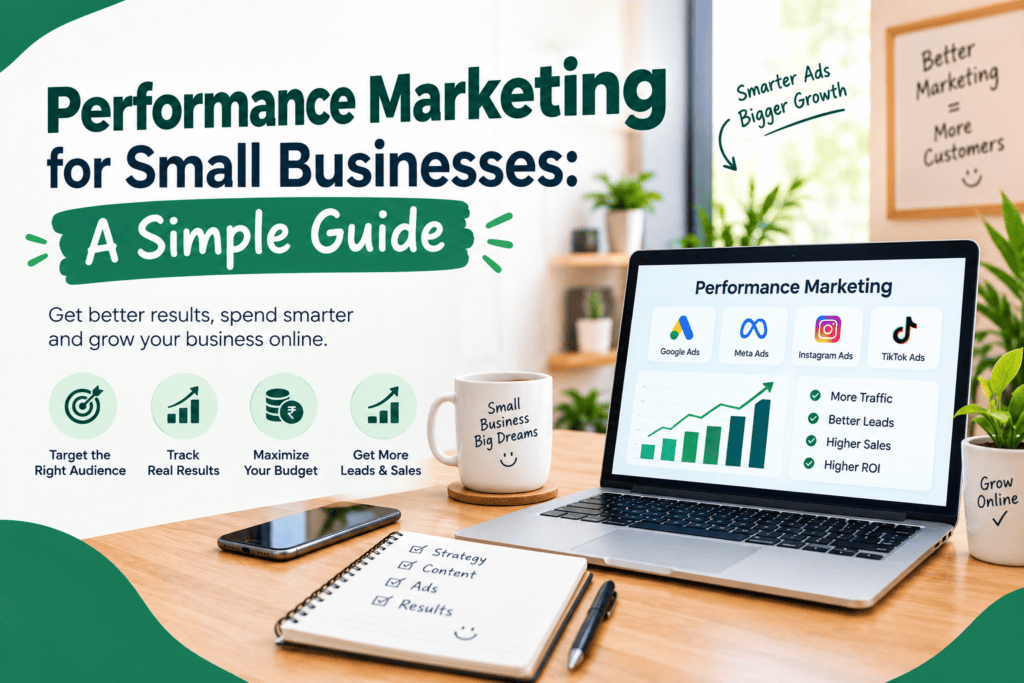
Performance Marketing for Small Businesses: A Simple Guide Small businesses need customers to grow. But getting new customers can be hard. Many businesses also have a small marketing budget. This is where performance marketing for small businesses can help. Performance marketing is a type of digital marketing. It focuses on results. You can track clicks, leads, calls, sales, and other actions. This helps small businesses see where their money goes. What Is Performance Marketing? Performance marketing is online marketing based on results. You run an ad or marketing campaign. You then track what people do. For example, you may run a Google ad for your web design service. Someone sees the ad and clicks it. They visit your website and fill out a form. You can track this whole process. You can see how many people clicked the ad. You can also see how many people became leads. This data helps you understand if your marketing is working. How Does Performance Marketing Work? Performance marketing follows a simple process. First, you choose a goal. Your goal could be: Next, you choose a marketing channel. You can use Google Ads, Meta Ads, email marketing, or affiliate marketing. Then, you create your campaign. You choose your audience. You write your ad. You set your budget. You send people to your website or landing page. After the campaign starts, you check the results. You can see which ads get clicks and which ads get leads or sales. You can then improve your campaign. Why Do Small Businesses Need Performance Marketing? Small businesses often cannot spend a lot of money on marketing. They need to use their budget carefully. Performance marketing helps them track results. For example, suppose you spend ₹10,000 on ads. You get 50 leads from those ads. You can calculate your cost per lead. This helps you understand how much you spend to get each lead. You can also find which ad brings the most leads. This makes it easier to manage your marketing budget. Main Types of Performance Marketing Small businesses can use different types of performance marketing. 1. Google Ads Google Ads can help you reach people who are already searching for your product or service. For example, a person may search for “digital marketing agency in Delhi.” A digital marketing agency can show an ad for this search. The person can click the ad and visit the website. Google Ads can be useful when people are already looking for what you offer. 2. Meta Ads Meta Ads run on platforms such as Facebook and Instagram. You can show ads to people based on factors such as location, interests, and online activity. For example, a gym in Delhi can show ads to people in nearby areas. The ad can offer a free trial or a special deal. 3. Affiliate Marketing Affiliate marketing uses other people or businesses to promote your products. The affiliate gets a commission when they generate a sale or another agreed action. For example, a blogger may promote your product on their website. If a reader buys the product through the affiliate link, the affiliate can earn a commission. 4. Email Marketing Email marketing can also support performance marketing. You can send emails to people who have shown interest in your business. You can promote products, services, offers, or useful content. You can track email opens, clicks, and sales. Important Performance Marketing Metrics You need to track the right numbers. Here are some common metrics. Cost Per Click (CPC) CPC tells you how much you pay for one ad click. For example, if you spend ₹1,000 and get 100 clicks, your CPC is ₹10. Cost Per Lead (CPL) CPL tells you how much you spend to get one lead. If you spend ₹2,000 and get 20 leads, your CPL is ₹100. Conversion Rate Conversion rate shows how many visitors take the action you want. The action could be filling out a form, making a purchase, or calling your business. Return on Ad Spend (ROAS) ROAS shows how much revenue you get from your ad spend. For example, you spend ₹5,000 on ads and make ₹20,000 in sales. Your ROAS is 4. How to Start Performance Marketing for Your Small Business Start with one clear goal. Do not try to do everything at once. Choose one goal that matters to your business. For example, you may want to get more phone calls. Next, choose your target audience. Think about who needs your product or service. Then choose the right platform. If people search for your service on Google, Google Ads may be useful. If you want to reach people on social media, Meta Ads may be useful. Create a simple ad. Tell people what you offer. Explain the main benefit. Add a clear call to action. For example: “Get a Free Quote Today.” Send people to a useful landing page. The page should load fast. It should explain your offer clearly. It should also make it easy for visitors to contact you. Then track your results. Check your clicks, leads, sales, and costs. Use this data to improve your campaign. Then use Ai tools like ChatGPT to improve work. Common Performance Marketing Mistakes Small businesses can make simple mistakes when running campaigns. One mistake is targeting too many people. A large audience does not always mean better results. Another mistake is using the same ad for everyone. Different customers may have different needs. Some businesses also forget to track conversions. Without conversion tracking, it can be hard to know which ads bring real customers. Another mistake is spending too much money too quickly. Start with a budget you can afford. Test your campaign first. Check the results. Then make changes. How Much Should a Small Business Spend? There is no single budget for every business. Your budget depends on your industry, location, competition, and goals. You can start with a small budget. For example, you could test a campaign with ₹300 to ₹500 per day. The

What Is a Social Media Marketing Agency?

What Is a Social Media Marketing Agency?

What Is a Social Media Marketing Agency? Social media is now a key part of online marketing. People use platforms like Instagram, Facebook, LinkedIn, and YouTube every day. Businesses use these platforms to reach new customers. They also use them to build trust and promote their products or services. But managing social media takes time. A business needs to create posts, make videos, reply to customers, run ads, and check results. A social media marketing agency helps with these tasks. It manages social media for businesses and helps them reach their goals. What Is a Social Media Marketing Agency? A social media marketing agency helps businesses market their products or services on social media. The agency creates a plan for the business. It then creates and shares content based on that plan. The main goal is to help the business reach the right people. A social media marketing agency can help a business: The agency can manage one platform or many platforms. What Does a Social Media Marketing Agency Do? A social media marketing agency offers many services. Here are the main ones. 1. Creates a Social Media Strategy Every business needs a plan. An agency first learns about the business. It looks at the products, customers, competitors, and goals. Then, it creates a social media plan. The plan can include: For example, a local clothing store may focus on Instagram. A B2B company may focus more on LinkedIn. The agency chooses platforms based on the business and its audience. 2. Creates Social Media Content Content is a big part of social media marketing. An agency can create different types of content. This may include: The content should match the brand. It should also give people a reason to follow and engage with the business. For example, a restaurant can share food photos, short videos, special offers, and customer reviews. 3. Manages Social Media Accounts Social media needs regular work. An agency can manage the business accounts every day. It can plan posts and schedule them. It can also reply to comments and messages. This keeps the account active. It also helps the business stay connected with its customers. 4. Runs Social Media Ads Businesses can also use paid ads on social media. An agency can create and manage these ads. For example, a business can run ads on Facebook or Instagram to reach people in a specific city. The agency can target people based on factors such as location, interests, age, and online activity. The goal is to show the ads to people who may need the product or service. 5. Manages Comments and Messages Social media is not just about posting. Customers may ask questions in comments or messages. They may also leave reviews. An agency can help manage these conversations. It can answer common questions and respond to comments. Fast replies can improve the customer experience. They can also help build trust in the brand. 6. Tracks Social Media Results An agency does not just post content. It also checks the results. It may track: This data shows what works and what does not. The agency can then change the strategy. For example, if short videos get more views than images, the agency may create more videos. Why Do Businesses Hire a Social Media Marketing Agency? Social media marketing takes time. Business owners already have many tasks to manage. They may not have enough time to create content and manage their social media accounts. An agency can take care of this work. It can also bring marketing skills to the business. The agency knows how to plan content, run ads, study results, and improve campaigns. This lets the business owner focus on running the business. Who Needs a Social Media Marketing Agency? Many types of businesses can use social media marketing. Some examples include: A business does not need to be large to use social media marketing. Small businesses can also use social media to reach local customers. For example, a salon in Delhi can use Instagram to show its work and attract people from nearby areas. What Are the Benefits of Hiring an Agency? Hiring a social media marketing agency can offer several benefits. Saves Time The agency handles daily social media work. This gives business owners more time to focus on their main work. Better Content An agency has people who focus on content and marketing. They can create content that matches the brand and its audience. Consistent Posting Regular posting helps keep the business active. An agency can create a content calendar and follow a fixed schedule. Better Ad Management Social media ads need proper targeting and testing. An agency can manage campaigns and use the budget more carefully. Easy Tracking The agency can track results and provide reports. This helps the business understand its social media performance. How Much Does a Social Media Marketing Agency Cost? There is no fixed price for social media marketing. The cost depends on the services a business needs. For example, basic social media management may cost less than a full service that includes content creation, video production, paid ads, and strategy. The number of platforms can also affect the price. Before hiring an agency, ask what the package includes. Do not look only at the price. Check the services, experience, reporting, and support as well. How to Choose a Social Media Marketing Agency Choosing the right agency is important. First, check the agency’s past work. Look at the type of businesses it has worked with. Next, ask about its process. Find out how the agency plans content and measures results. You should also ask about: Choose an agency that understands your business. It should also set clear goals and explain its work in simple terms. Avoid agencies that promise instant results. Social media marketing takes time. Results depend on the business, audience, content, and strategy. Social Media Marketing Agency vs. Doing It Yourself A business can manage social media on its own. This can work for

How Digital Marketing Earn Money: A Simple Guide

How Digital Marketing Earn Money: A Simple Guide

How Digital Marketing Earn Money: A Simple Guide Digital marketing is a popular way to grow a business online. Many businesses use digital marketing to find new customers and increase sales. But how digital marketing earn money? Digital marketing can help you earn money in many ways. You can work as a freelancer. You can start a digital marketing agency. You can sell your own products. You can also earn through affiliate marketing. Let us look at the main ways to make money with digital marketing. 1. Freelancing Freelancing is one of the easiest ways to start earning with digital marketing. You can offer your skills to businesses. You can work from home and choose your clients. You can offer services such as: For example, a local business may need help with Instagram. You can create posts and manage its account. You can charge the business a monthly fee. You can also charge for each project. 2. Start a Digital Marketing Agency You can start your own digital marketing agency. An agency helps businesses with their online marketing. You can offer many services under one business. These services can include SEO, social media, Google Ads, Meta Ads, web design, and email marketing. You can start with one or two clients. As you get more clients, you can build a team. For example, you can charge ₹15,000 per month for your services. If you have 10 clients, you can make ₹1,50,000 in monthly revenue. Your actual profit will depend on your business costs. 3. Affiliate Marketing Affiliate marketing is another way to earn money online. You promote another company’s product or service. The company gives you a special link. You share this link with your audience. You can share it on your website, blog, YouTube channel, or social media. If someone buys the product through your link, you get a commission. For example, you can write a blog about digital marketing tools. You can add affiliate links to the tools you recommend. When readers buy through your links, you can earn money. 4. Sell Digital Products You can also create and sell digital products. Digital products are easy to sell online. You do not need to store or ship them. Some examples are: For example, you can create an ebook about social media marketing. You can use digital marketing to promote the ebook. You can use SEO, social media, email, and online ads to reach buyers. You create the product once. You can then sell it many times. 5. Create Content Content creation can also help you earn money. You can create videos, blogs, posts, or podcasts. Choose a topic that you know well. You can create content about: As your audience grows, you can earn money in different ways. You can earn through ads, brand deals, affiliate links, and your own products. You can also use your content to get clients for your services. 6. Offer SEO Services SEO means Search Engine Optimization. SEO helps websites appear in search results. Many businesses want more people to find their websites on Google. You can help these businesses improve their search rankings. Your SEO work may include: You can charge clients a monthly fee for SEO. SEO can give you regular income because businesses need ongoing SEO work. 7. Manage Social Media Accounts Many business owners do not have enough time to manage social media. This creates an opportunity for digital marketers. You can manage social media accounts for businesses. Your work can include creating posts, writing captions, making reels, and replying to comments. You can also check the results of each post. You can charge clients a monthly fee for managing their accounts. The price will depend on the number of platforms and services you provide. 8. Run Online Ads Businesses spend money on online ads to get customers. You can help them run these ads. You can manage ads on platforms such as Google and Meta. Your job can include finding the right audience, creating ads, setting budgets, and checking results. You can charge a monthly fee for managing ad campaigns. Good results can also help you get more clients through referrals. 9. Offer Email Marketing Email marketing is another way to earn money. Businesses use email to stay in touch with customers. They also use it to promote products and services. You can help businesses create and send emails. Your services can include: You can charge businesses for each campaign. You can also offer monthly email marketing packages. 10. Become a Digital Marketing Consultant Experienced marketers can work as consultants. A consultant helps businesses improve their marketing. You can check a business website, social media pages, SEO, ads, and content. You can then suggest ways to improve them. For example, you may find that a business gets traffic but very few leads. You can suggest changes to its website and marketing strategy. You can charge a fee for your advice and marketing plan. Then use AI tools like ChatGPT to improve work How Much Money Can You Earn From Digital Marketing? There is no fixed income in digital marketing. Your income depends on your skills and experience. It also depends on the services you offer and the clients you work with. A beginner may start with small projects. An experienced marketer can charge more. You can also increase your income by working with more clients or starting an agency. The key is to build useful skills and get good results. How to Start Earning With Digital Marketing You do not need to learn everything at once. Start with one skill. SEO, social media marketing, content writing, and paid ads are good options. Learn the basics. Practice your skills on real projects. Create a portfolio. Your portfolio shows clients what you can do. Then start looking for clients. You can contact small businesses directly. You can also use freelance websites and social media to find work. Start with simple projects. Focus on getting good results. As you gain experience,

Should I Hire a Digital Marketing Agency
Uncategorized

Should I Hire a Digital Marketing Agency?

Should I Hire a Digital Marketing Agency? Many business owners ask, “Should I hire a digital marketing agency?” The answer depends on your business. It also depends on your budget, goals, and skills. Digital marketing can help you reach more people online. It can also help you get leads and sales. But managing digital marketing takes time and skill. If you do not have the time or knowledge to do it yourself, an agency can help. What Is a Digital Marketing Agency? A digital marketing agency helps businesses grow online. It uses different online marketing methods to reach customers. These methods can include: An agency can plan and manage your online marketing. It can also track results and make changes when needed. Should I Hire a Digital Marketing Agency? You should first look at your business needs. You may need an agency if you have limited time. You may also need one if you do not have a skilled marketing team. Here are some signs that you may need professional help. 1. You Do Not Have Enough Time Digital marketing needs regular work. You need to create content. You need to post on social media. You also need to check your website and ads. SEO also needs regular updates. Paid ads need testing and tracking. If you are busy running your business, you may not have time for all these tasks. An agency can handle these tasks for you. This gives you more time to focus on your business. 2. You Do Not Know Digital Marketing Digital marketing has many parts. SEO needs keyword research and website work. Google Ads need proper targeting and testing. Social media also needs a clear plan. You can learn these skills yourself. But learning takes time. An agency already has people who work in these areas. They can create and manage your marketing plan. 3. Your Website Gets Little Traffic A website alone does not bring customers. People need to find your website first. SEO can help your website appear in search results. An agency can check your website and find problems. It can also help you choose the right keywords. The team can create content that matches what people search for. SEO takes time. But it can bring steady traffic when you do it well. 4. Your Ads Are Not Working Paid ads can bring quick traffic. But bad ads can waste your money. You may get many clicks but few leads. You may also spend money on people who are not interested in your product. An agency can check your ad campaigns. It can improve your audience targeting. It can test different ads. It can also track which ads bring leads or sales. This can help you use your ad budget better. 5. You Want More Leads and Sales You may have a good product or service. But you still need customers. Digital marketing can help you reach the right people. For example, a local business can use local SEO and Google Ads. An online store can use SEO, social media, email, and paid ads. An agency can create a plan based on your business and target customers. Benefits of Hiring a Digital Marketing Agency Hiring an agency can give your business several benefits. Saves Your Time The agency handles your marketing work. You can spend more time on your business. Then use AI tools like ChatGPT to improve your work. Gives You Expert Help A good agency has people who understand SEO, ads, content, and social media. Creates a Clear Plan An agency can create a marketing plan for your goals. It can also change the plan based on your results. Helps You Track Results You can track website traffic, leads, sales, and ad results. This helps you see where your money is going. Helps Your Business Grow A good marketing plan can help you reach more people. It can also help you get more leads and customers over time. When Should You Not Hire an Agency? An agency may not be right for every business. If you have a very small budget, you may want to start on your own. You can create social media pages. You can write simple content. You can also learn basic SEO. But this can take a lot of time. When your business grows, you may need professional help. An agency can then take over more marketing tasks. How Much Does a Digital Marketing Agency Cost? The cost can vary from one agency to another. It depends on the services you need. It also depends on your goals and business size. Some agencies charge a monthly fee. Others charge for specific projects. You should not choose an agency only because it is cheap. Look at the services, experience, work quality, and results before you decide. How to Choose the Right Agency Choosing the right agency is important. Ask the agency about its services. Ask about its past work. Ask how it tracks results. You should also ask what you will get for your money. Avoid agencies that promise instant results. SEO and other marketing methods can take time. A good agency should explain its plan clearly. It should also give you regular updates. Final Thoughts So, should I hire a digital marketing agency? If you do not have enough time or marketing skills, an agency can be a good choice. It can help with SEO, ads, social media, content, and other online marketing tasks. Before hiring one, check your goals and budget. Choose an agency that understands your business. The right agency can help you reach more customers, get more leads, and grow your business online. For more information check our more Blogs.

Where Is Digital Marketing Used
Digital marketing

Where Is Digital Marketing Used?

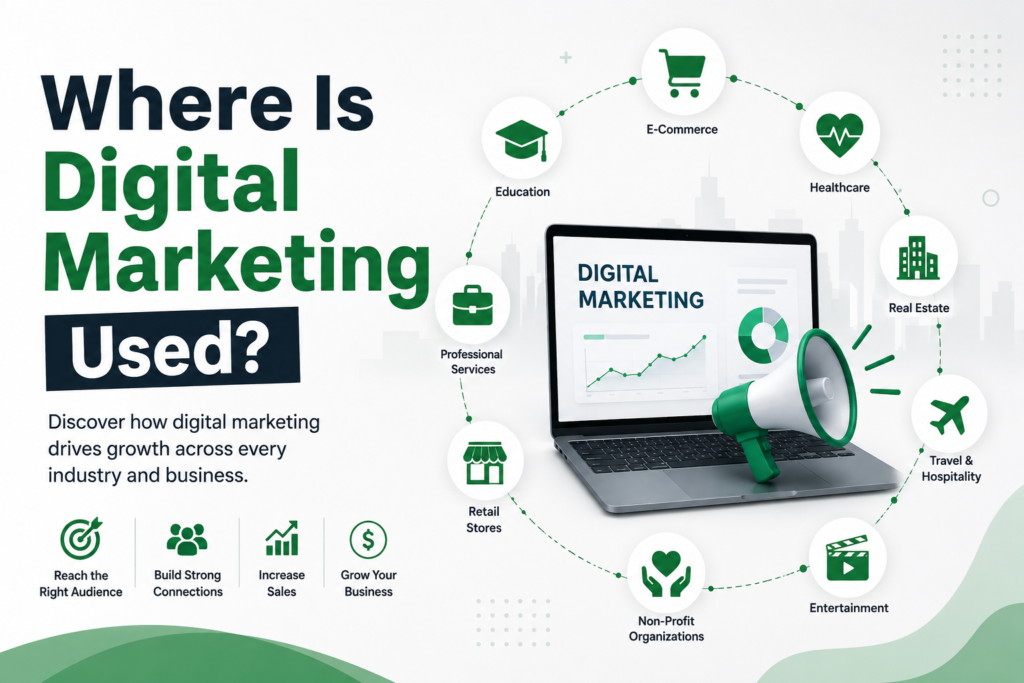
Introduction Where is Digital marketing used ? Digital marketing is used in many places. Businesses use it to reach people online. They use it to promote products, get leads, and increase sales. Today, most people use the internet every day. They search on Google, watch videos, use social media, and shop online. This is why digital marketing has become important for businesses. Let’s look at where digital marketing is used. Social Media Platforms Many businesses use digital marketing on social media. Platforms like Facebook, Instagram, LinkedIn, and X help businesses connect with customers. Companies post photos, videos, tips, and offers. They also run paid ads to reach more people. For example, a clothing store can post pictures of new products on Instagram. People who like the products can visit the website or store. Social media helps businesses build trust and stay connected with customers. Search Engines Digital marketing is widely used on search engines like Google. People search for products, services, and information every day. Businesses want their websites to appear in those search results. They use SEO (Search Engine Optimization) to improve their rankings. They also use Google Ads to get quick visibility. For example, a dentist may want to appear when someone searches for “best dentist near me.” Search engines help businesses reach people who are already looking for their services. Business Websites A website is one of the most important digital marketing tools. Businesses use websites to share information about their products and services. Customers can learn about the business, contact the company, or make a purchase. A website works as an online store, office, or brochure. Many businesses also publish blog articles on their websites. These articles help attract visitors from Google. For more information check our website Dotsoical Online Stores E-commerce businesses depend on digital marketing. Online stores use SEO, social media, email marketing, and paid ads to get customers. For example, an online shoe store can run Facebook ads to promote new products. It can also send emails about discounts and special offers. Without digital marketing, it is difficult for online stores to attract buyers. Email Marketing Businesses use email marketing to stay in touch with customers. They send emails about new products, special offers, and company updates. Email marketing is useful because it allows businesses to contact people directly. For example, an online store may send an email about a weekend sale. Customers can click the link and shop immediately. Email marketing helps businesses increase repeat sales. Local Businesses Digital marketing is not only for large companies. Local businesses use it too. Restaurants, salons, gyms, clinics, and repair shops use digital marketing to reach people in their area. Many local businesses create a Google Business Profile. This helps them appear in local search results. For example, if someone searches for “restaurant near me,” Google can show nearby restaurants. Local digital marketing helps businesses attract more customers from their city or neighborhood. Mobile Devices Many people use smartphones to browse the internet. Because of this, businesses use digital marketing on mobile devices. They create mobile-friendly websites and run mobile ads. Some businesses also use SMS marketing and mobile apps. For example, a food delivery app may send a notification about a discount offer. Mobile marketing helps businesses reach people wherever they are. Video Platforms Video marketing is growing fast. Businesses use platforms like YouTube, Instagram Reels, and Facebook Videos to share content. Videos can explain products, answer questions, or teach something useful. For example, a software company can create a video that shows how its product works. Videos are easy to watch and often get more engagement than text. Content Marketing Content marketing is another area where digital marketing is used. Businesses create useful content to help their audience. This content may include: For example, a digital marketing agency may publish articles about SEO and social media marketing. People searching for this information can find the website through Google. Good content helps build trust and attract potential customers. B2B Companies B2B means Business-to-Business. These companies sell products or services to other businesses. B2B companies use digital marketing to generate leads and find new clients. They often use: For example, a web design company can write blog articles about website development. Business owners who read those articles may become clients. Freelancers and Personal Brands Freelancers also use digital marketing. Graphic designers, writers, consultants, coaches, and marketers use digital channels to promote their services. They share content on social media, websites, and professional platforms. For example, a freelance designer can post design projects on LinkedIn. Potential clients can see the work and contact the designer. Digital marketing helps freelancers find more opportunities. Why Do Businesses Use Digital Marketing? Businesses use digital marketing because it helps them reach the right audience. It is often more affordable than traditional marketing. Businesses can track results easily. They can see: This data helps them improve their marketing campaigns. Digital marketing also allows businesses to target people based on location, interests, and online behavior. Conclusion Digital marketing is used in many places. Businesses use it on social media, search engines, websites, online stores, email, mobile devices, and video platforms. Small businesses, large companies, freelancers, and online stores all use digital marketing to reach customers. As more people spend time online, digital marketing will continue to grow. It remains one of the best ways for businesses to attract customers, build trust, and increase sales. Then use AI tools like ChatGPT to improve your work.

how digital marketing works for beginners
Digital marketing

How Digital Marketing Works for Beginners: A Simple Guide

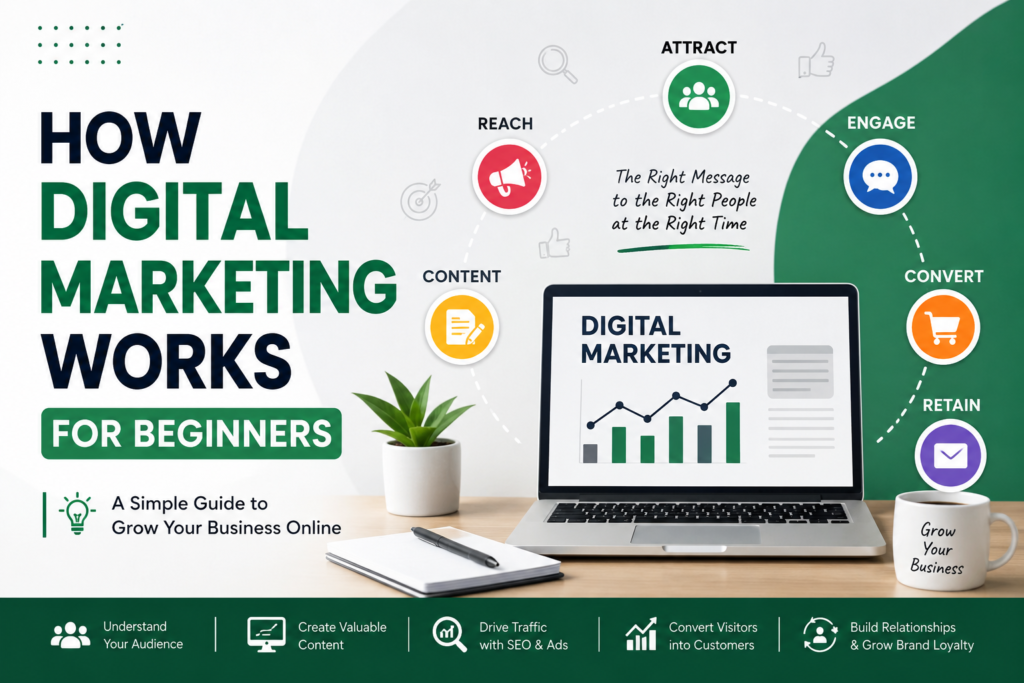
How Digital Marketing Works for Beginners: A Simple Guide Digital marketing helps businesses find customers online. People use Google, social media, websites, and email every day. Businesses use these channels to reach them. But how does digital marketing work? The process is simple. A business finds its target audience. It reaches them online. It shares useful content. It builds trust. Then, it turns visitors into leads and customers. Let’s understand how it works step by step. What Is Digital Marketing? Digital marketing means promoting a business online. Businesses use many online channels for this. Some common channels are: The main goal is to reach the right people. For example, a local salon wants more customers. It can create a website. It can also use Google and Instagram to reach people who need salon services. This is digital marketing. How Does Digital Marketing Work? Digital marketing follows a simple process. Find → Reach → Engage → Convert → Retain Each step has a clear purpose. 1. Find Your Target Audience First, a business needs to know who it wants to reach. This group is called the target audience. A business can look at: For example, a fitness center may target people who want to lose weight or build muscle. Knowing the target audience helps a business choose the right marketing channels. 2. Build an Online Presence The next step is to build an online presence. A website is often the main part of this presence. It tells people what the business does. A good website should have: A business can also create social media profiles. These profiles help the business connect with more people. 3. Create Useful Content People often search for information before they buy something. This is where content helps. A business can create: For example, a digital marketing agency can write a blog about SEO for beginners. Someone searching for SEO tips may find the blog on Google. That person may then visit other pages on the website. They may learn about the agency’s services. They may also contact the agency. Useful content can bring new visitors to a website. 4. Use SEO to Get Traffic From Google SEO stands for Search Engine Optimization. SEO helps a website appear in Google search results. For example, a person may search for: “Digital marketing agency near me.” A business that uses SEO can try to rank for this search. SEO includes many tasks. These include: SEO takes time. But it can bring free traffic from search engines. 5. Use Social Media Social media is another key part of digital marketing. Businesses use platforms like Instagram, Facebook, LinkedIn, and YouTube. They share content to reach their audience. For example, a clothing store can post videos of new clothes. A restaurant can post food photos and videos. A digital marketing agency can share simple marketing tips. Social media helps businesses stay connected with their audience. It can also help a business build trust. 6. Run Online Ads Businesses can also use paid ads. Google Ads and social media ads are common choices. Ads can help a business reach people faster. For example, a person searches Google for “best web design company.” A web design company can show an ad for this search. Social media ads work in a different way. They can target people based on things like location, interests, and online behavior. Businesses can set a daily or monthly budget for their ads. Good ads can bring more traffic, leads, and sales. But businesses need to track their ads. Poor ads can waste money. 7. Turn Visitors Into Leads Getting website visitors is only one part of digital marketing. The next goal is to turn visitors into leads. A lead is a person who shows interest in a business. For example, a visitor may: A clear call to action can help. For example: “Get a Free Quote” is better than a vague button like: “Click Here.” Make it easy for visitors to take the next step. 8. Turn Leads Into Customers Not every lead will buy right away. Some people need more information first. A business can answer their questions. It can show reviews. It can share useful content. It can explain its services. These steps help build trust. For example, a person may contact a digital marketing agency but not hire it on the same day. The agency can follow up and answer their questions. When the person feels ready, they may become a customer. 9. Use Email Marketing Email marketing helps businesses stay in touch with people. Businesses can send emails about: For example, an online store can send an email about a new product. It can also remind customers about products they left in their cart. Email helps businesses build long-term relationships. 10. Track Your Results Digital marketing gives businesses access to useful data. You can track: This data shows what works and what does not. For example, you run two ads. Ad A brings 10 leads. Ad B brings 30 leads. You can study Ad B and use what worked in your next campaign. This helps you improve your marketing. Simple Example of Digital Marketing Let’s take a local salon as an example. First, the salon creates a website. The website lists its services, prices, location, and contact details. Next, the salon creates an Instagram page. It posts photos and videos of its work. The salon also uses SEO to rank for searches like: “Salon near me.” It can then run Google Ads to reach more local customers. A person sees the salon on Google. They visit the website. They check the services and reviews. Then, they click “Book an Appointment.” The salon gets a new lead or customer. After the visit, the salon can ask the customer for a review. This can help attract more people in the future. This is how different parts of digital marketing work together. Why Is Digital Marketing Important? Digital marketing helps businesses reach people where they spend time. It

What Does a Digital Marketing Agency Do
Digital marketing

What Does a Digital Marketing Agency Do? A Complete Guide

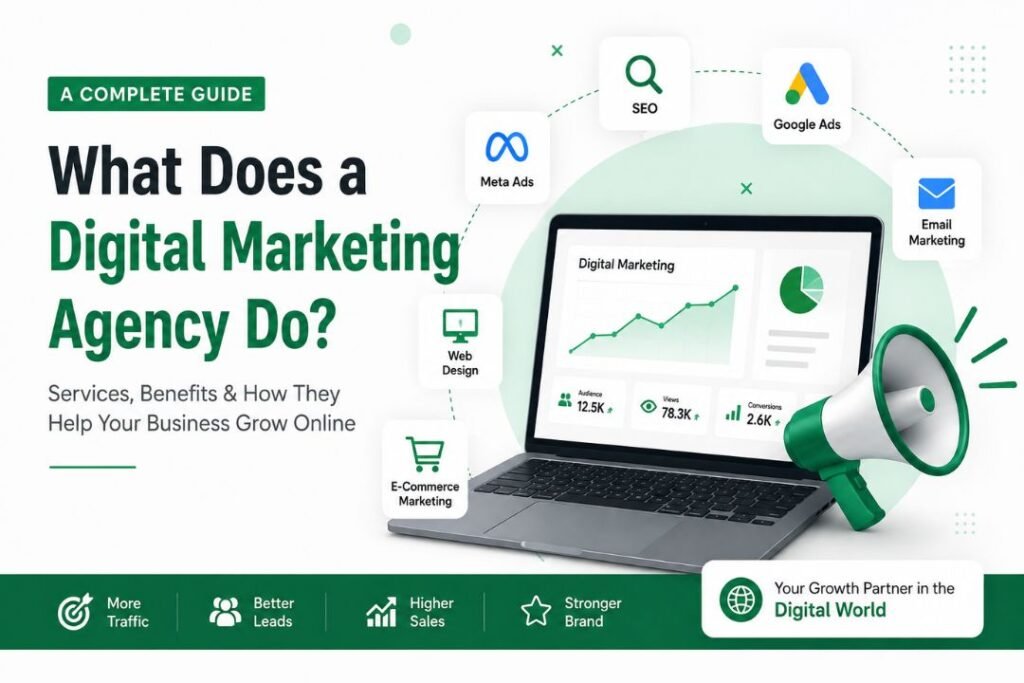
Introduction A good product or service is not enough to grow a business. People need to find your business first. This is where digital marketing can help. What Does a Digital Marketing Agency Do? A digital marketing agency helps businesses grow online. It uses different online channels to reach potential customers. These channels include SEO, social media, Google Ads, Meta Ads, content marketing, email marketing, and website design. For example, an agency can help your website rank higher on Google. It can also run ads on Google, Facebook, and Instagram. It can create content for your website and social media. It can also improve your website to help you get more leads and sales. Digital marketing also makes it easier to track results. You can see how many people visit your website. You can see how many people click your ads. You can also track leads, sales, and other key results. But what does a digital marketing agency do on a daily basis? What services does it offer? And when should a business hire one? In this guide, we will answer these questions. We will also explain the main services, benefits, costs, and ways to choose the right digital marketing agency. What Is a Digital Marketing Agency? A digital marketing agency helps businesses market their products or services online. It uses different digital channels to reach potential customers. These channels can include: The agency creates a marketing plan based on the business goals. It first learns about the business and its target customers. Then, it chooses the right marketing channels. For example, a local restaurant may need local SEO and Google Ads. These services can help people find the restaurant when they search online. An online store may need SEO, Meta Ads, Google Ads, and email marketing. These services can help the store attract visitors and increase sales. A B2B company may need SEO, content marketing, and LinkedIn marketing. These services can help the company reach business owners and decision-makers. So, there is no single strategy that works for every business. A good agency creates a plan based on the business, audience, industry, and goals. What Is the Main Goal of a Digital Marketing Agency? The main goal is to help a business get real results from online marketing. These results can include: A simple digital marketing process looks like this: Visibility → Traffic → Leads → Customers → Growth First, the agency helps people find the business. Then, it brings those people to the website or another online channel. The next step is to turn visitors into leads or customers. For example, an agency may use SEO to bring people to a website. It may then improve the website to make it easier for visitors to contact the business. The agency also tracks the results. If a campaign is not working well, it makes changes. This helps the business use its marketing budget in a better way. In simple terms, a digital marketing agency helps a business reach the right people, bring them to the business, and turn them into customers. What Does a Digital Marketing Agency Do? A digital marketing agency can handle many parts of a business’s online marketing. The services depend on the business and its goals. Some businesses need help with SEO. Others may need paid ads, social media, or a better website. Many businesses need a mix of different services. Here are the main services a digital marketing agency can provide. Then use AI tools like ChatGPT to improve your work. 1. Search Engine Optimization (SEO) SEO helps a website appear higher in Google search results. A digital marketing agency can improve your website so that search engines can understand it better. It can also help your website reach people who are searching for your products or services. SEO services can include: For example, suppose you run a local salon. Your customers may search for “best salon near me” on Google. An SEO strategy can help your business appear in relevant searches. This can bring more visitors to your website and more enquiries to your business. SEO takes time. It is usually a long-term strategy. But it can bring regular traffic without paying for every click. 2. Website Design and Development Your website is often the first place people learn about your business. A digital marketing agency can design or improve your website. The goal is to make the website easy to use and easy to understand. A good business website should: An agency may also create landing pages for marketing campaigns. For example, if you run a Google Ads campaign for a specific service, the agency can create a landing page for that service. The page can focus on one goal, such as getting a phone call or form submission. A good website can help turn visitors into leads and customers. 3. Google Ads and PPC Advertising Google Ads allows businesses to show ads when people search for specific keywords. For example, someone may search for “digital marketing agency near me.” A business can use Google Ads to show its ad for that search. A digital marketing agency can help with: Google Ads can bring traffic faster than SEO. However, you pay for the clicks or other actions based on the campaign setup. The agency also tracks the results. It can see which keywords and ads bring the best results. It can then adjust the campaign to improve performance. 4. Social Media Marketing Social media helps businesses connect with their audience. A digital marketing agency can create a social media strategy for platforms such as Instagram, Facebook, and LinkedIn. Social media services can include: The goal is not just to post every day. The content should help the business reach the right audience. For example, a local clothing store can use Instagram to show new products. A B2B company can use LinkedIn to share industry tips and reach business decision-makers. 5. Meta Ads Meta Ads allow businesses to advertise on platforms such

Scroll to Top
Call Now Button